CPCF settlement: 2026/27
Published on: 7th April 2025 | Updated on: 21st July 2026
In May 2026, funding and other arrangements for community pharmacies for 2026/27 were finalised. Community Pharmacy England accepted the offer on condition of a shared programme of reform with Government and NHS England.
The resources below set out information on the CPCF for 2026/27 in a variety of formats to help pharmacy owners understand the key elements of the settlement.
Animation






In each section below we have outlined that element of the CPCF settlement in more detail.
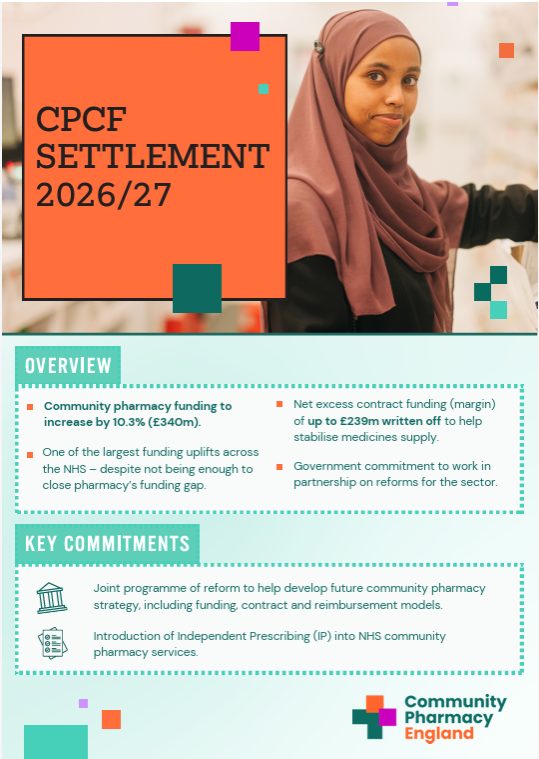
The settlement brings the funding budget to £3,636 million for provision of the CPCF and Pharmacy First in 2026/27, which includes an allowance for central digital costs. This is an uplift of 10.3% compared to the budget for 2025/26.
The ‘Pharmacy First’ budget – which funds the cost of Pharmacy First clinical pathways consultations, the Pharmacy Contraception Service and the Hypertension Case-Finding Service – will be combined with the core CPCF sum. This guarantees the funding envelope to the sector and removes the previous risk of underspend.
As part of the settlement, the level of allowed medicines margin for 2026/27 is being increased by £200m to £1.1 billion.
Up to £239 million of net contract (margin) funding over-delivery accrued up to March 2026 will also be written off.
The Single Activity Fee (SAF) will increase by 6 pence to £1.52 per item; other dispensing and service-related fees will remain unchanged.
Independent Prescribing (IP)
Independent Prescribing will be introduced into the CPCF as an extension of Pharmacy First and the Pharmacy Contraception Service (PCS) from autumn 2026, with community pharmacist prescribers enabled to:
- Prescribe within the existing Pharmacy First clinical pathways and the PCS.
- Provide up to five new Pharmacy First prescribing-only pathways – options to be considered include bacterial conjunctivitis, allergic conjunctivitis, oral thrush, skin infections and respiratory tract infections. In advance of their rollout, the new pathways will need to be approved by a clinical reference group. These consultations will count towards the monthly clinical pathways minimum activity requirement.
- Prescribe an alternative item where there is a need to meet the needs of an individual patient, e.g. where there is a supply chain issue relating to the original prescription, and there are arrangements in place with the original prescriber to allow such an approach.
Supporting documentation and changes to the Terms of Service will cover the various clinical governance requirements related to prescribing activities.
Funding will include a one-off setup payment of £500 payable when a pharmacy owner has signed up to provide the relevant services and has a confirmed go-live date with an NHS-assured Electronic Prescribing Service (EPS) IT system. Additionally, there will be a monthly infrastructure payment of £525 in addition to the usual Pharmacy First or PCS consultation fees.
Find out more about IP on our Prescribing within the CPCF webpage.
Pharmacy First
The current capping mechanism for Pharmacy First Clinical Pathway consultations will be retained. This approach will also be extended to introduce a cap for IP consultations, giving two caps within each band: one applicable to pharmacies signed up to provide prescribing services, and one for those who are not.
The Pharmacy First ‘bundling’ requirements which mean pharmacy owners must be registered to provide the Hypertension Case-Finding Service (HCFS) and PCS in order to receive the Pharmacy First monthly payment (when they also meet the monthly volume target) will be retained, with no further additions to the requirements.
Claim window for clinical services
There will be a 2-month late claim window for Pharmacy First and the New Medicine Service (NMS) – the two Advanced Services that still have a 1-month claim window. This gives pharmacy owners a total of 3 months to claim.
Further work will be undertaken by DHSC to consider whether additional late, corrected and discretionary claims options sought by Community Pharmacy England can be introduced.
Clinical audit
No clinical audits will be required in 2026/27 as part of the clinical governance requirements within the Terms of Service.
Health campaigns
During 2026/27, pharmacies will only have to take part in a maximum of two national health campaigns and two campaigns selected by their Integrated Care Board (ICB).
A PQS will run in 2026/27, with fewer requirements than in previous years and a smaller budget of £20 million. The new scheme retains some existing criteria and sees the addition of new criteria intended to support the safe introduction of prescribing into community pharmacy.
The scheme will commence in June and it will continue to be an optional part of the CPCF.
Pharmacy owners that choose to participate will be able to claim in July an Aspiration payment of 80% (up from 75% last year) of the overall points value they intend to claim. This Aspiration payment will be made on 1st September 2026.
New Pharmacy Quality Scheme for 2026/27 announced
PQS: The Aspiration payment window is now open
Full guidance and resources are available on our PQS hub webpage.
Closures for staff learning and development
Changes will be introduced to enable pharmacies to close during core or supplementary opening hours for periods of staff training and development. There will be a notification procedure for pharmacy owners to follow, and the closures will be limited to a maximum of four hours in a day up to once a month. Certain restrictions will apply with the detail to follow in due course.
Disclosure and Barring Service (DBS) checks
All pharmacists and pharmacy technicians will be expected to have an enhanced DBS check to support the safe provision of clinical services (this requirement moves from the 2025/26 PQS to the Terms of Service).
Further regulatory changes/issues
Adjustments will also be made to:
- Confirm that pharmacy owner cooperation is required for the ICB to undertake or continue dispute resolution (dispute resolution usually occurs before the ICB considers whether to issue a breach or remedial notice).
- Ensure that an ICB writes to all parties to explain any delays to a market entry application (beyond the times specified in the PLPS regulations). This will be an addition to the Pharmacy Manual.
In addition:
- Confirmation of NHS England support to ICBs, to ensure there is a consistent (and proportionate) approach to enforcement of the Terms of Service, recognising the importance of this to patients, the public and NHS pharmacies.
IP regulatory changes
As noted above, regulatory changes associated with the introduction of IP will be implemented, with wider guidance being issued on clinical governance for prescribing services.
EPS nominations
DHSC will consider strengthening the Terms of Service to help address inappropriate management of EPS nominations by a small number of pharmacy owners. NHS England will continue to work with the national EPS team and ICB teams to identify and address cases of poor behaviour.
Violence and abuse in pharmacies
DHSC will continue to work with Community Pharmacy England, the Chief Pharmaceutical Officer and other stakeholders to explore possible actions to help protect pharmacy staff, including Terms of Service changes.
Pharmacist flexibilities
DHSC is considering (as part of a public consultation) whether, in certain circumstances (such as supply disruptions), the supervising pharmacist may dispense a medicine of a different form or strength to that prescribed. Community Pharmacy England requested that pharmacist flexibilities should also include brand to generic changes, but this was not agreed.
Pharmacy Access Scheme (PhAS)
DHSC has given a commitment to review and update PhAS, implementing any changes from 2027/28.
Further information on the various changes will be made available in due course.
There were also discussions on supply with reasonable promptness, collection and delivery arrangements and changing core opening hours, and these discussions are likely to continue along with other regulatory discussions such as (i) the introduction of pharmacist-authorised, pharmacy technician dispensing and supervised dispensing, and (ii) whether Responsible Pharmacist (RP) absences (under the RP Rules) should be introduced/permitted in NHS community pharmacies in England.
Within the final offer, the Government also confirmed its intention to take forward a joint programme of reform with Community Pharmacy England, to inform future strategy for community pharmacy and input to the next contractual negotiations and beyond. This will include a programme of reform to support a sustainable and resilient community pharmacy network. This commitment was a significant factor in the Committee’s decision to accept the settlement.
In addition, further work is planned to take forward specific measures set out in submissions and proposals from both sides of the negotiations.
Funding and reimbursement work
- Reviewing distribution of margin and longer-term goals for reimbursement of medicines supplied;
- Engagement with ICBs on branded generics prescribing;
- Improving and validating the margin survey;
- Exploring how the contractual framework can recognise and reward sustainable purchasing behaviours;
- Setting high level caps on the HCFS and the Minor Illness strand of Pharmacy First, plus reconsidering caps on Pharmacy First Urgent Medicines Supply consultations.
Services/Regulatory considerations
- Review of contractual/regulatory commitments to reduce pharmacy owners’ costs, burdens and risks, for example:
- supply with reasonable promptness (which links to dispensing at a loss).
- the following Essential services: Support for self-care, Public Health (Promotion of healthy lifestyles) and the Healthy Living Pharmacy requirements.
Webinar and Roadshow events
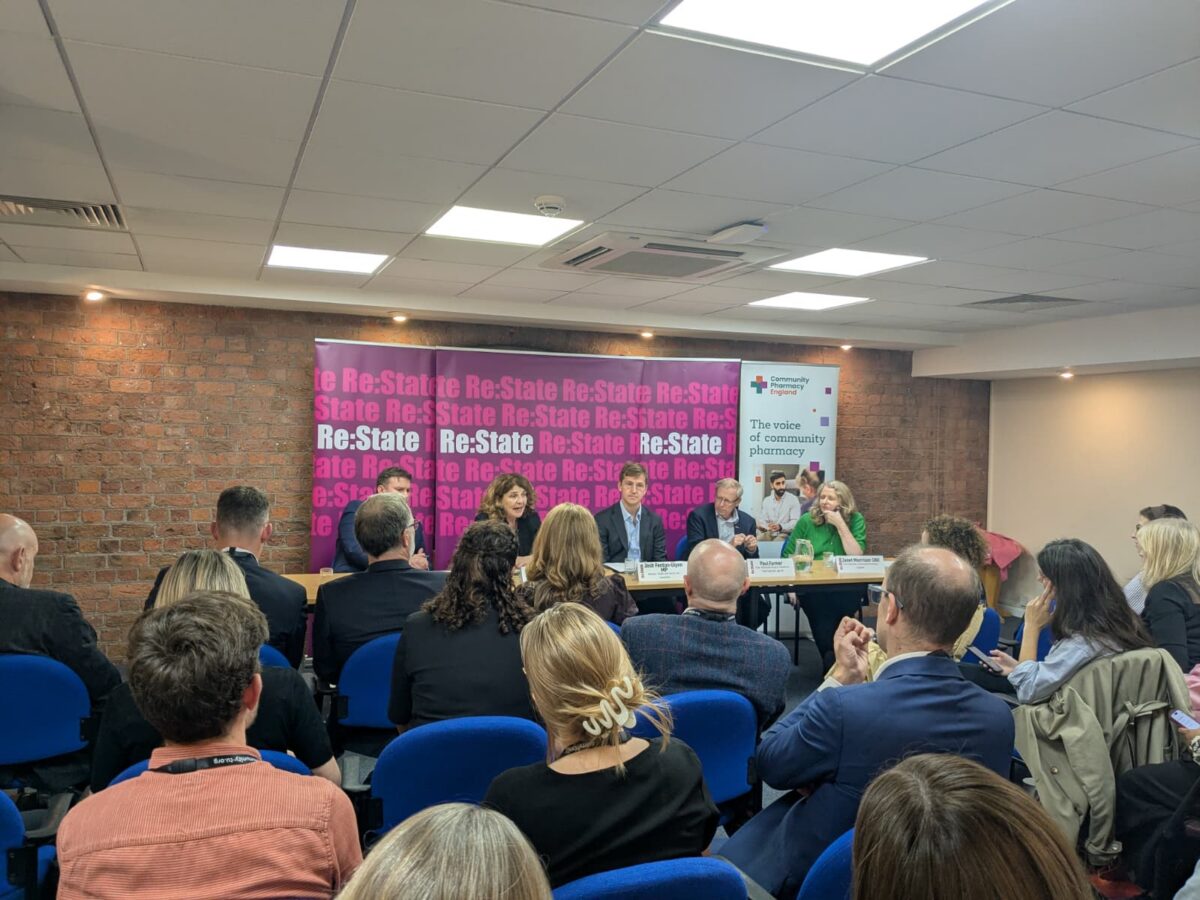
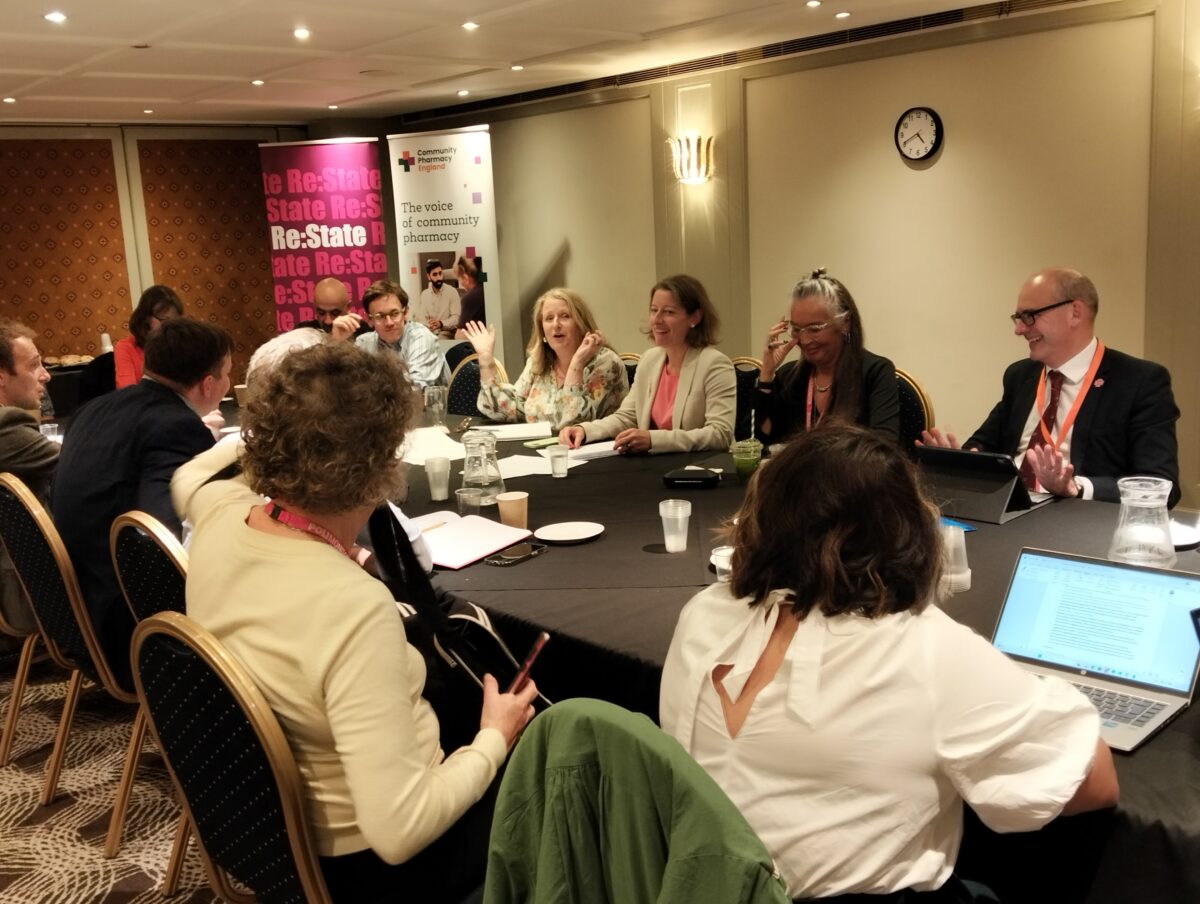
We held a series of online and in-person events through June and July where pharmacy owners were able to learn more about the implications of the new funding settlement for their businesses and share their views on future reform with Community Pharmacy England.
Regional Roadshows: Capacity expanded as pharmacy owners keen to discuss the future
For external audiences
Community Pharmacy England is continuing our political influencing campaign to gain wide and vocal support from MPs and other stakeholders, and to ask for their help in pressing for the long-term sustainable solution that community pharmacies, and everyone they serve, needs, and for specific measures such as to improve medicines supply resilience, prevent pharmacies from having to dispense at a loss, and for further investment to support Independent Prescribing.
We have produced a number of resources which may help in explaining this settlement and what it means to external audiences, such as MPs or ICBs:
For more information on this topic please email comms.team@cpe.org.uk